

Learn how to make crispy, golden Masala Dosa at home with perfectly fermented dosa batter. Get easy tips for preparing the batter and making restaurant-style dosas every time.
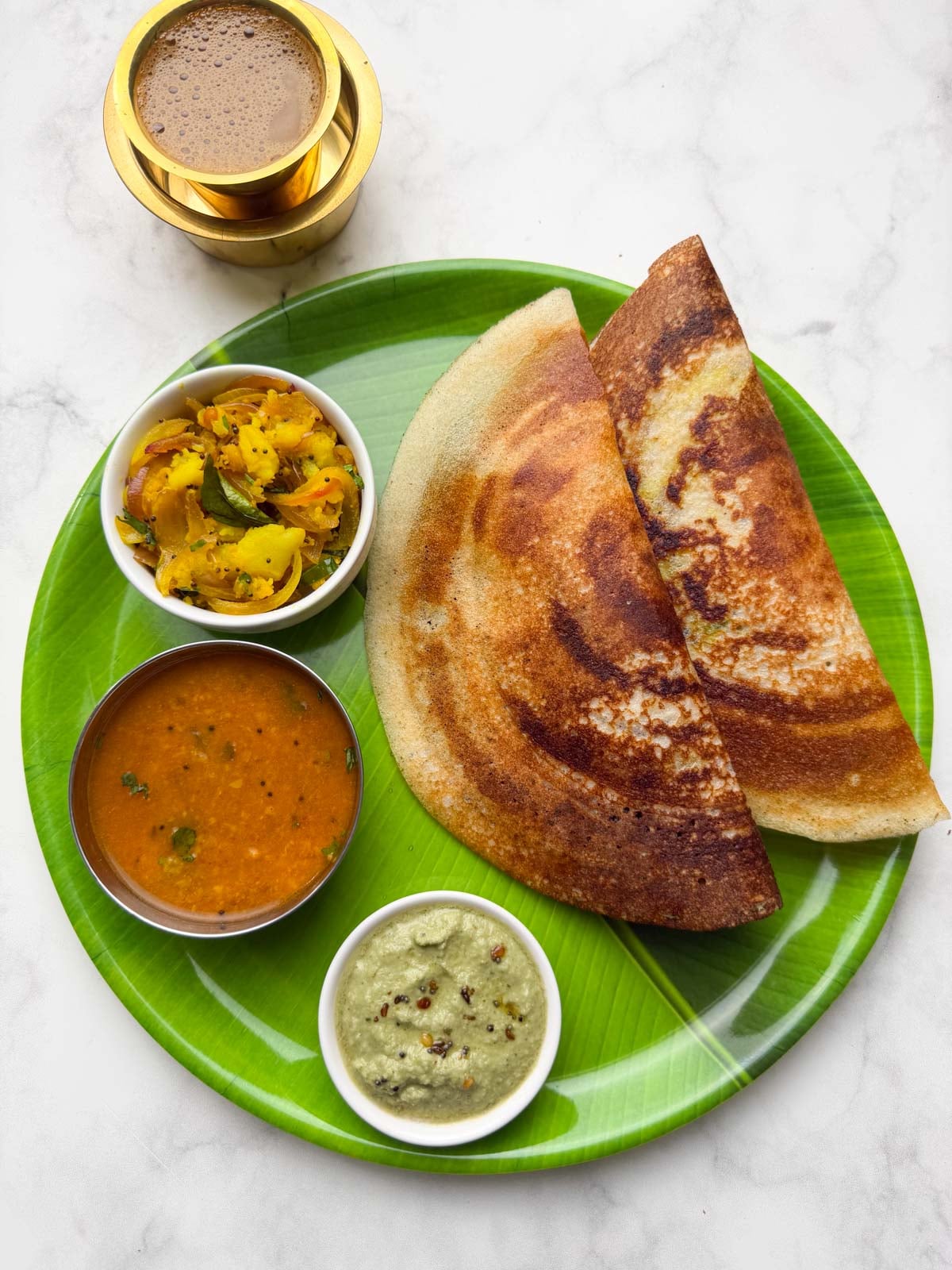
When we think of South Indian food, Dosa is probably one of the first dishes that comes to mind. It's crispy, delicious, and something we can enjoy any time of the day. Whether it's breakfast, lunch, dinner, or even a quick snack, dosa is always a great choice!
Growing up, Sundays were dosa days at our home. My mom would make crispy dosas and serve them with potato masala (aloo palya) and her delicious coriander coconut chutney. I also loved sprinkling some peanut chutney powder or idli podi over my dosa and finishing it with a little ghee. Those simple Sunday breakfasts are some of my favorite food memories.
A dosa, dose, or dhosai is a thin, crispy South Indian pancake made from fermented rice and lentil batter. It can be served plain or filled with a flavorful potato masala, like the classic Masala Dosa.
We almost always have dosa batter in our refrigerator because there are so many things we can make with it. Besides dosa, we use the leftover batter to make paddu (paniyaram), paneer uttapam, pongulu, and even dosa waffles.
In this post, I'll show you how to make crispy Masala Dosa at home, along with tips for making and fermenting the perfect dosa batter.
Masala Dosa Ingredients
- Rice: Use raw white rice (dosa rice) or sona masoori rice.
- Lentils: Gota Urad Dal (whole urad dal) makes the batter creamy and helps it ferment. Chana dal and toor dal are added for texture, color, and flavor.
- Poha: Adds softness to the dosa batter.
- Methi seeds: Help with fermentation and add a subtle bitterness.
- Salt: For seasoning.
- Oil or ghee: Used to cook the dosa for a crispy, golden exterior and rich flavor.
How to Make Crispy Masala Dosa
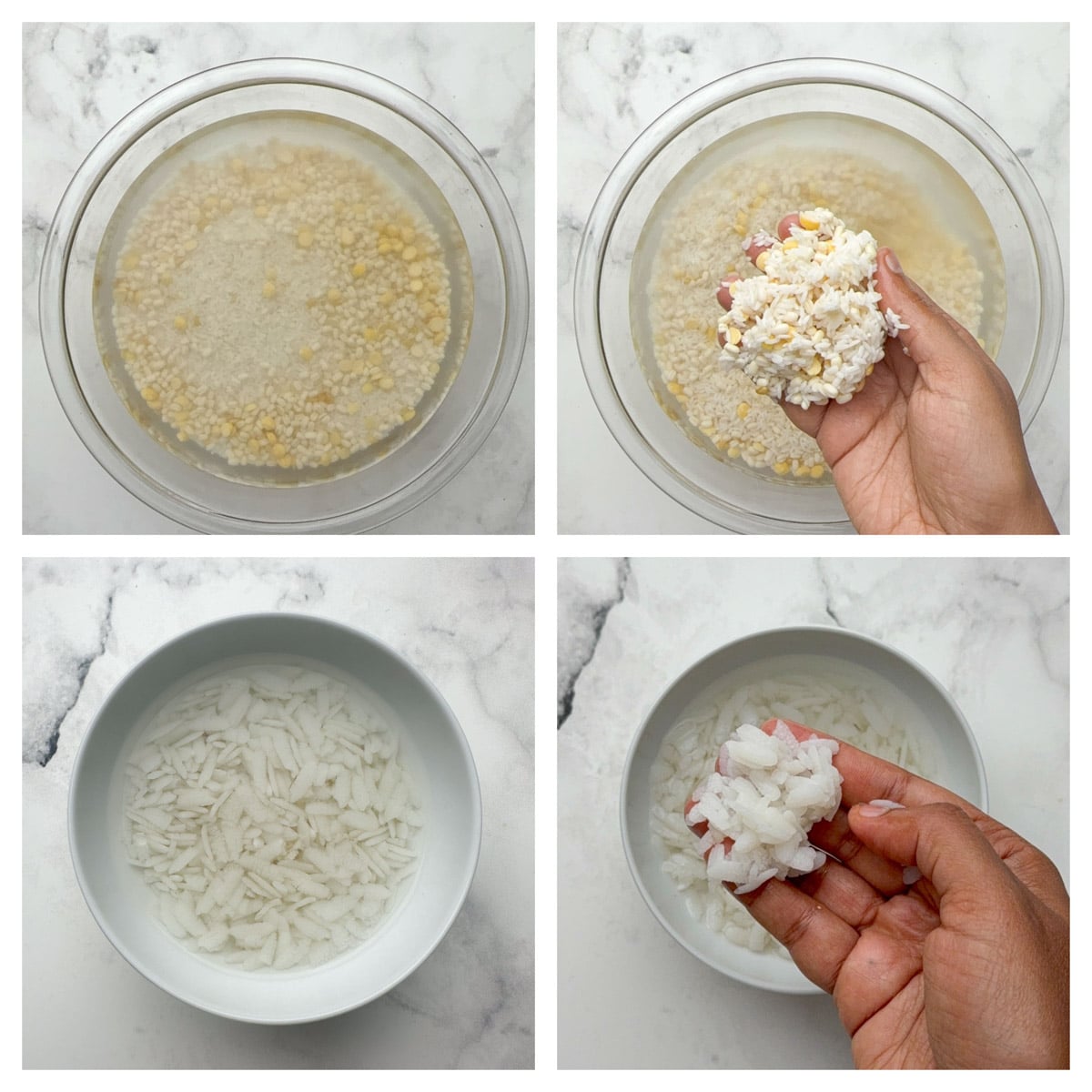
Soaking
Soak 1½ cups raw white rice (Sona Masuri or dosa rice), ½ cup whole urad dal,1 tablespoon each of chana dal and toor dal, ½ teaspoon methi seeds together in water.
Separately, soak ¼ cup poha in water for about 20 minutes.
Grinding:
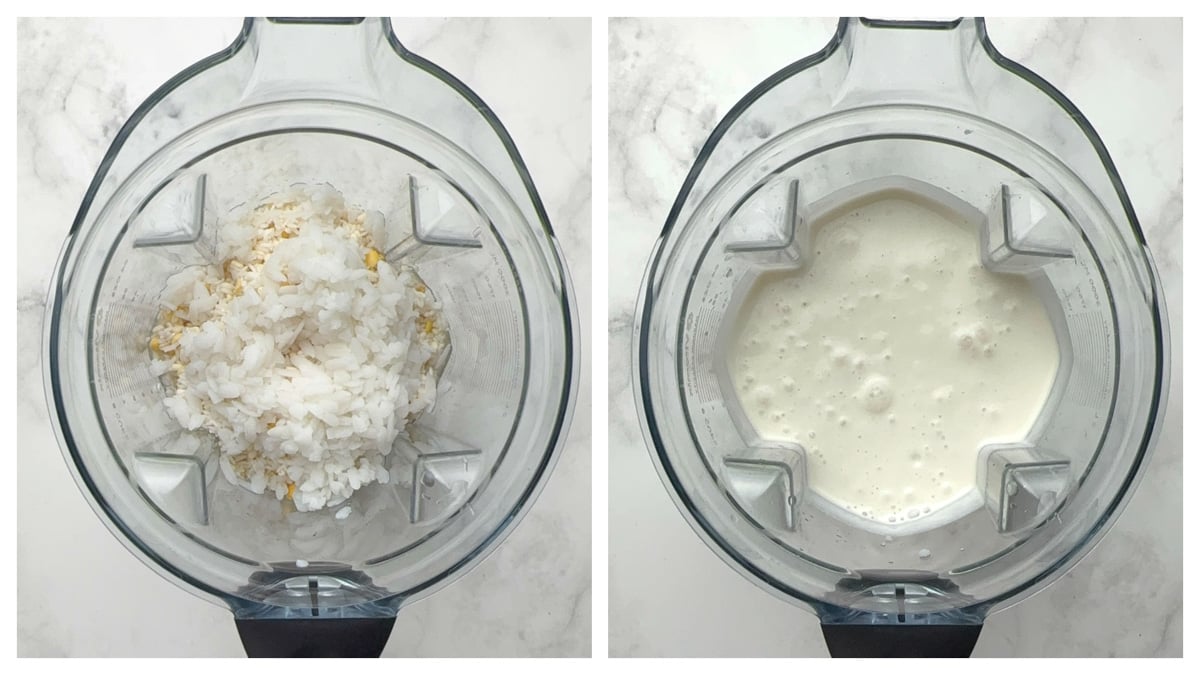
Drain the soaked ingredients and transfer them to a blender. Add ½ cup water and grind into a smooth batter. Add more water, if needed, to achieve a medium-thick, pourable consistency.
Fermentation:
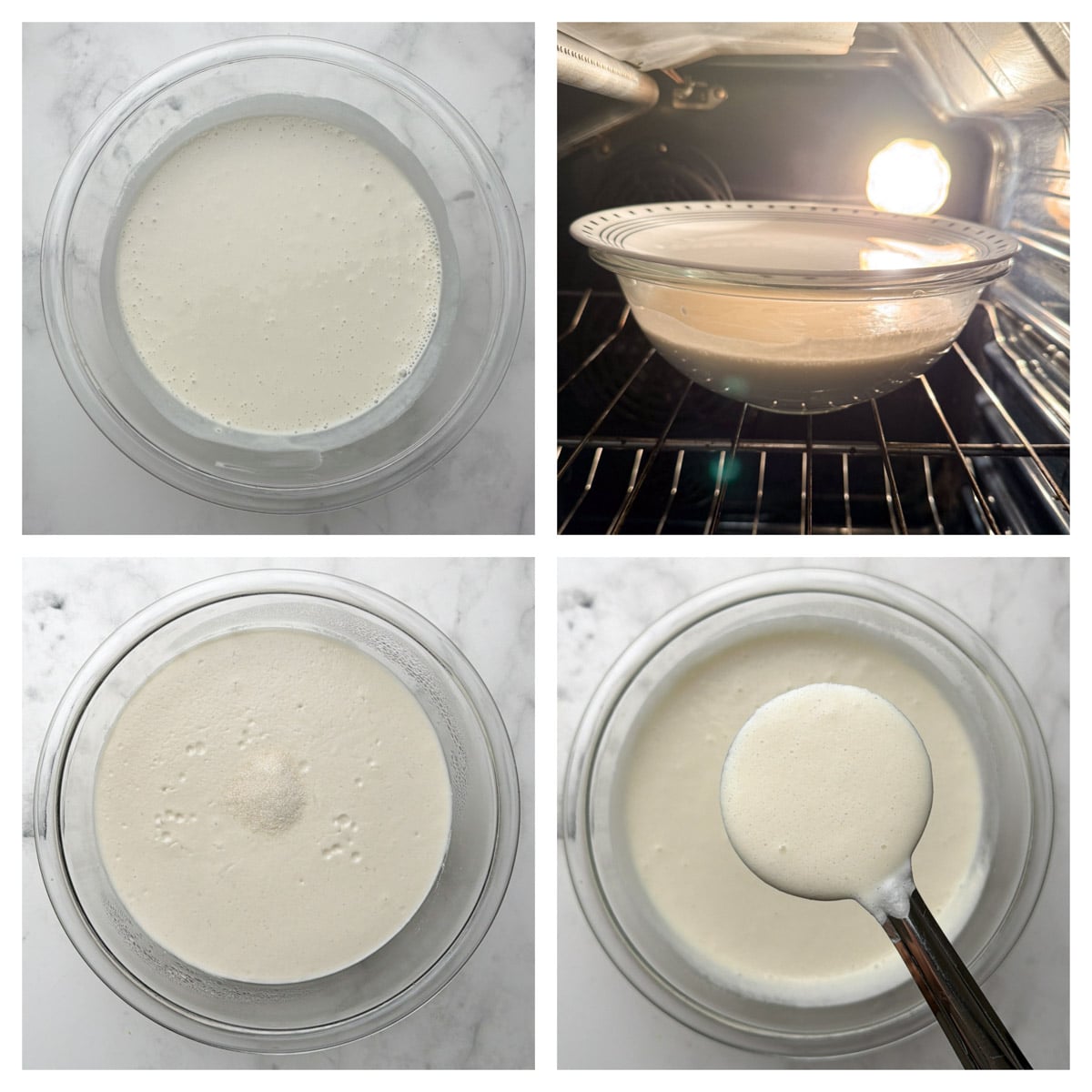
Add salt to taste, then gently mix the batter well with your hand. Mixing by hand helps incorporate air into the batter, making the dosa softer and lighter.
Cover the batter and let it ferment in a warm place for 8-12 hours. In cold climates, use an oven with the light on or the Instant Pot Yogurt mode to help maintain a warm temperature.
Fermentation is done when the batter doubles in volume and develops a slightly sour smell. Add 1 teaspoon of sugar, stir the fermented batter gently. Mix well before making the dosa.
Cooking:
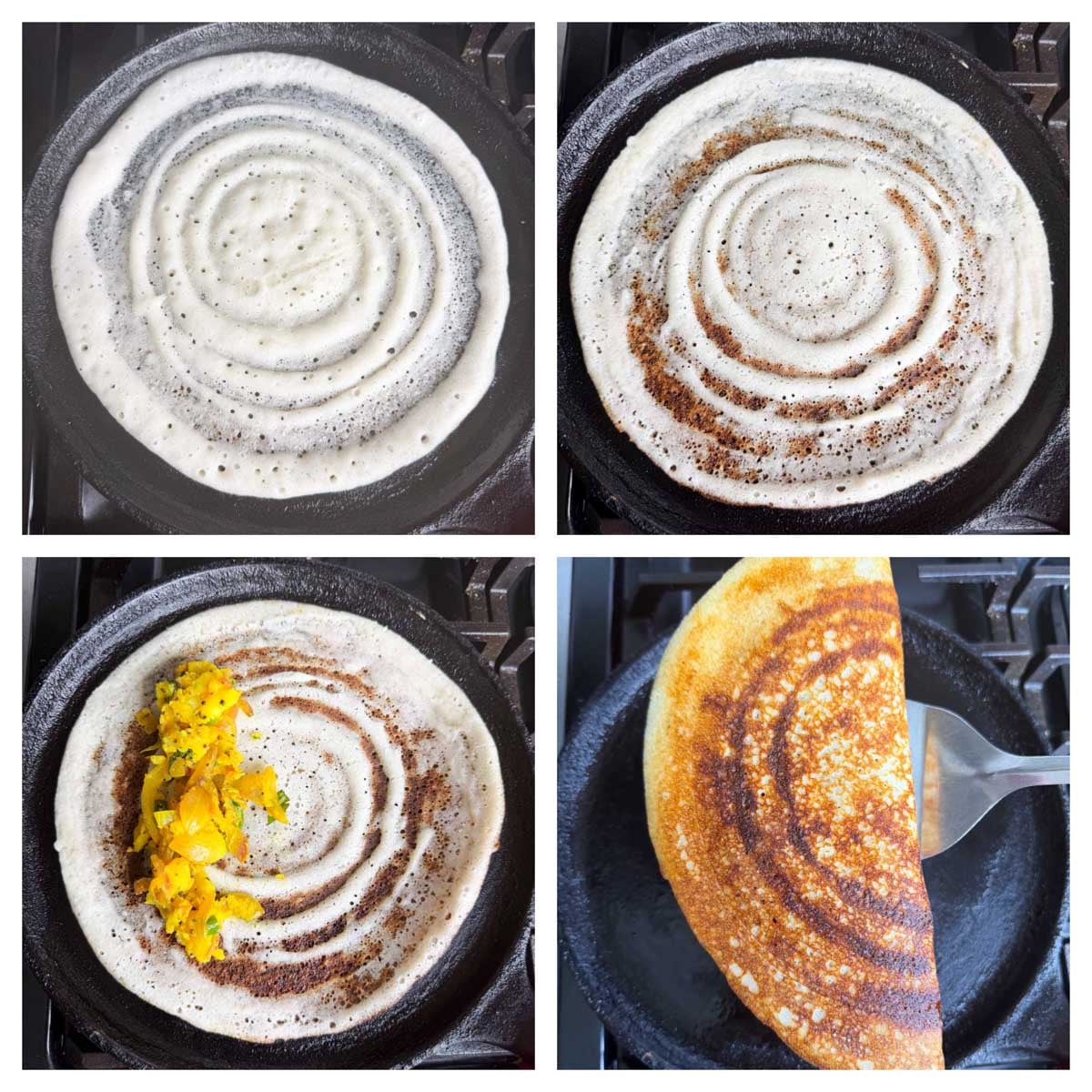
Heat a non-stick dosa tawa and pour a ladleful of batter onto it. Spread the batter in a circular motion to form a thin dosa. Drizzle a little ghee or oil around the edges and on top for extra crispiness.
Cook until the bottom turns golden brown, You dont have to cook both sides. Spread a tasty potato masala mixture over the dosa.
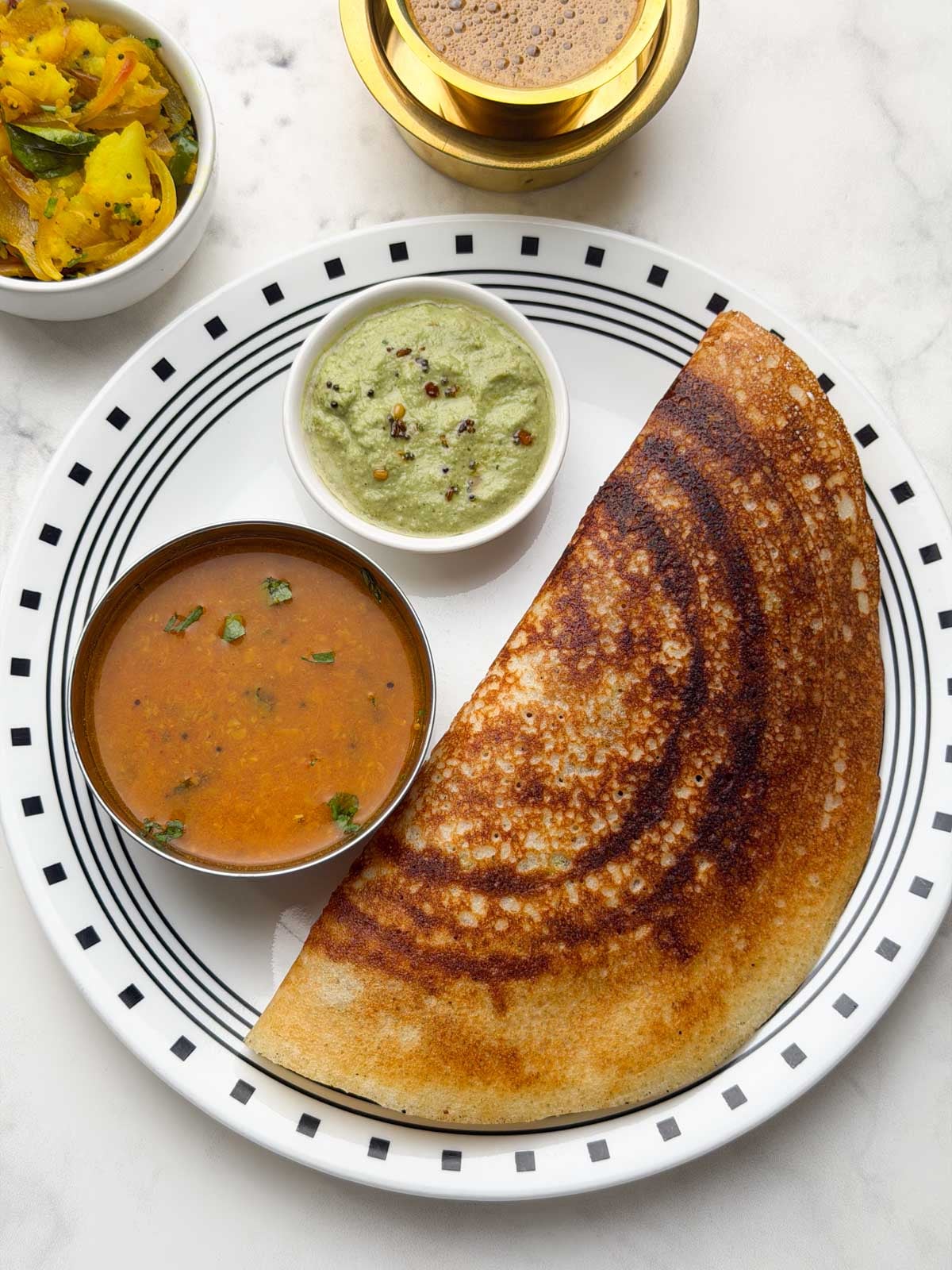
Serve hot with coconut chutney or sambar.
How to Make Mysore Masala Dosa?
To make Mysore Masala Dosa, first, prepare the dosa batter and let it ferment. Then, heat a pan and spread a thin layer of the batter to make the dosa.
Next, add a spicy red chutney (kempu chutney) made from red chilies, garlic, and spices. After that, spread a tasty potato masala mixture. Fold or roll up the dosa and serve it hot with coconut chutney and sambar.
This combination of spicy chutney, flavorful potato masala, and crispy dosa creates a delicious and satisfying Mysore Masala Dosa.
Serving Suggestions
- Coriander Coconut Chutney: A creamy dip made from coconut and spices. It goes well with dosa.
- Vegetable Sambar: A vegetable stew with lentils. Serve it in a small bowl alongside the dosa for extra flavor. You can also serve with tomato saaru.
- Tomato Onion Chutney: Tangy and sweet, made from tomatoes and spices. Perfect with dosa.
- Idli Podi: A dry powder with lentils and spices. Sprinkle it on dosa for extra crunch and flavor.
Storage and Leftovers
Refrigeration: Store leftover dosa batter in a sealed container in the fridge for 2-3 days.
Tips for Perfect Crispy Dosa
- Ferment properly: Ferment the batter for 8-12 hours, or until it has increased in volume and looks bubbly. Proper fermentation helps create light, crispy dosas.
- Get the batter consistency right: The batter should be medium-thin and pourable. If it's too thick, the dosa can turn dense instead of crispy. Add water gradually as needed.
- Cold-weather fermentation: In colder climates, use the Instant Pot Yogurt mode or place the batter in an oven with the light on to provide a warm environment for fermentation.
- Toor Dal for Shine: Toor dal gives dosas a shiny appearance and adds a subtle nutty flavor.
- Chana Dal for Crisp: Chana dal adds crunchiness to dosas, making them extra crispy.
- Pre-Fermentation Additions: Some Restaurants also add ingredients like semolina (bombay rava) and rice flour before fermenting the batter, giving dosas a grainy texture.
- Sugar for Caramel Texture: Adding a bit of sugar to the batter helps dosas achieve a golden-brown color and a hint of sweetness.
Frequently Asked Questions
A wet grinder produces smooth, well-aerated dosa batter and is traditionally preferred for dosa and idli.
However, you can also use a high-powered blender such as a Vitamix or Preethi mixer grinder. It can grind soaked rice and dal into a smooth batter and works well when you don't have a wet grinder.
Add salt before fermenting the dosa batter. This allows the salt to season the batter as it ferments and is especially useful in colder climates, where fermentation can take longer.
If you prefer, you can also add salt after fermentation, just before making the dosas. Both methods work, so use whichever works best for your fermentation conditions and taste.
The dosa batter consistency plays an important role in achieving crispy dosas. It should be smooth and pourable, but not too thick or too thin. Getting the right rice-to-urad dal ratio is also important. I use a 3:1 ratio of rice to urad dal, using 1½ cups rice and ½ cup urad dal.
Your dosa might not be crispy because the batter is too thick, the tawa isn't hot enough, there's not enough or too much oil or ghee, the batter hasn't fermented enough, or the cooking time is incorrect.
The batter might be too thick.
The tawa might not be hot enough.
The tawa might not be seasoned.
You might need to improve your spreading technique.
To prevent dosas from sticking to the pan, ensure it's heated properly, use a non-stick or well-seasoned pan, brush with oil or ghee, maintain medium-thin batter consistency, spread the batter gently, and adjust heat as needed.
Yes, you can use split urad dal for soaking to make dosa batter. It's a common practice and will work well to achieve the desired texture and flavor in your dosas.
Sure! You can use dosa batter to make different dishes like uttapam (thicker dosas with toppings), punugulu (a savory deep-fried snack), and even waffles (by adding some extra ingredients). It's a versatile batter that can be used in various recipes to make tasty dishes.
Masala Dosa Recipe
Ingredients
- 1 ½ cups sona masoori rice
- ½ cup urad dal gota
- 1 tablespoon toor dal
- 1 tablespoon chana dal
- ½ teaspoon methi seeds
- ¼ cup medium poha
- salt to taste
- 1 teaspoon sugar
- oil (or ghee) for cooking dosa
Instructions
Soaking
Soak raw white rice (Sona Masuri or dosa rice), whole urad dal, chana dal, and toor dal, methi seeds together in water.- Separately, soak medium poha in water for about 20 minutes.
Grinding:
Drain the soaked ingredients and transfer them to a blender. Add ½ cup water and grind into a smooth batter. Add more water, if needed, to achieve a medium-thick, pourable consistency.Fermentation:
Add salt to taste, then gently mix the batter well with your hand. Mixing by hand helps incorporate air into the batter, making the dosa softer and lighter.- Cover the batter and let it ferment in a warm place for 8-12 hours. In cold climates, use an oven with the light on or the Instant Pot Yogurt mode to help maintain a warm temperature.
- Fermentation is done when the batter doubles in volume and develops a slightly sour smell. Add sugar, stir the fermented batter gently. Mix well before making the dosa.
Cooking:
Heat a non-stick dosa tawa and pour a ladleful of batter onto it. Spread the batter in a circular motion to form a thin dosa. Drizzle a little ghee or oil around the edges and on top for extra crispiness.- Cook until the bottom turns golden brown, You dont have to cook both sides. Spread a tasty potato masala mixture over the dosa. Serve hot with coconut chutney or sambar.
Nutrition
★ Like this recipe? FOLLOW ME on Facebook, Instagram, Pinterest, and Youtube for more quick & easy recipes.
Leave a Reply